2026/27 UEFA Champions League: Season Preview, Format, Key Dates and Teams to Watch

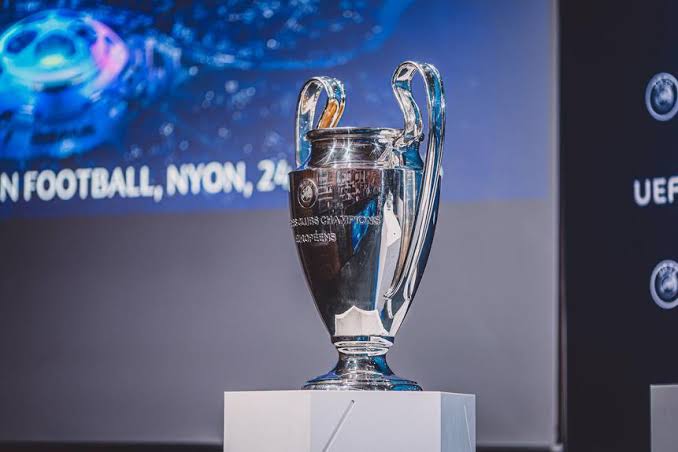
The 2026/27 UEFA Champions League will bring together another group of Europe's leading clubs for a season of high-level competition, tactical adjustments and closely contested matches.
The competition is now entering its third season under the league-phase format introduced in 2024/25. Instead of the traditional group stage, 36 clubs compete in one overall league table, with each team playing eight matches against eight different opponents.
This format has changed the way the early stages of the competition are assessed. Clubs must balance the importance of individual results with their position in a much larger table, while the route into the knockout rounds depends on finishing position rather than simply qualifying from a small group.
This season preview examines the structure of the competition, the important dates, teams and players to follow, statistical indicators that can help explain performances, and the tactical factors that could influence the campaign.
The objective is not to identify a guaranteed winner. Football remains unpredictable, and the strongest analysis should distinguish between measurable evidence, reasonable expectations and uncertainty.
Table of Contents
- What Is Different About the 2026/27 Champions League?
- 2026/27 Champions League Key Dates
- Knockout Phase Schedule
- Why the League Phase Changes Team Analysis
- Teams to Watch in 2026/27
- Other Teams Worth Monitoring
- Players to Watch
- Statistics That Matter in Champions League Analysis
- How Tactical Style Can Influence European Matches
- Home and Away Performance
- Squad Depth and Player Availability
- Fixture Congestion and Recovery Time
- Why Champions League Matches Are Difficult to Analyze
- A Practical Framework for Analyzing a Champions League Match
- What Could Decide the 2026/27 Champions League?
- How to Read Champions League Predictions Responsibly
- Final Thoughts
- Sources and Further Reading
What Is Different About the 2026/27 Champions League?
The Champions League continues to use the league-phase system rather than the previous four-team group format.
The league phase contains 36 clubs in a single table. Each team plays eight matches, with four at home and four away, against eight different opponents.
After the eight league-phase matchdays, the teams are ranked together according to the competition's rules.
The top eight teams qualify directly for the round of 16. Teams finishing from ninth to 24th enter the knockout phase play-offs, while teams finishing 25th or lower are eliminated from the Champions League.
This structure creates an important analytical difference from the previous group-stage system. A team is no longer competing against only three opponents for a place in the next round. Its position is determined within a much larger field.
That makes every match part of a wider league calculation and increases the importance of consistency across the eight fixtures.
UEFA has confirmed that the 2026/27 competition will feature 36 clubs in the league phase, with 29 teams qualifying directly and the remaining seven places being decided through qualifying and the play-off round.
2026/27 Champions League Key Dates
The competition begins with qualifying rounds in July before the league phase starts in September. UEFA's published calendar currently lists the following dates, although competition dates can be subject to change.
Qualifying and League Phase
- First qualifying round: July 7/8 and 14/15, 2026
- Second qualifying round: July 21/22 and 28/29, 2026
- Third qualifying round: August 4/5 and 11, 2026
- Play-offs: August 18/19 and 25/26, 2026
- League phase draw: August 27, 2026
- League phase Matchday 1: September 8–10, 2026
- League phase Matchday 2: October 13/14, 2026
- League phase Matchday 3: October 20/21, 2026
- League phase Matchday 4: November 3/4, 2026
- League phase Matchday 5: November 24/25, 2026
- League phase Matchday 6: December 8/9, 2026
- League phase Matchday 7: January 19/20, 2027
- League phase Matchday 8: January 27, 2027
The qualifying rounds determine the final seven clubs that join the 29 teams already qualified for the league phase.
Knockout Phase Schedule
After the league phase, the competition moves into the knockout rounds. The final positions in the league table determine which teams qualify directly and which must play an additional knockout tie.
- Knockout phase play-offs: February 16/17 and 23/24, 2027
- Round of 16: March 9/10 and 16/17, 2027
- Quarter-finals: April 6/7 and 13/14, 2027
- Semi-finals: April 27/28 and May 4/5, 2027
- Final: June 5, 2027
The UEFA Champions League final is scheduled to take place at the Estadio Metropolitano in Madrid on Saturday, June 5, 2027.
Why the League Phase Changes Team Analysis
The league-phase format changes the context in which early-season results should be interpreted.
Under the traditional group system, teams could evaluate their position primarily against three opponents. The new format introduces eight different opponents and a single ranking containing all 36 clubs.
This makes strength of schedule particularly relevant.
A team that records four wins against weaker opponents may have a different underlying profile from a team that collects the same number of points against several of Europe's strongest clubs.
For that reason, league position should be considered alongside the quality of opposition, chance creation, defensive performance and match context.
The same principle applies when comparing clubs from different domestic leagues. Their domestic statistics are produced in different competitive environments, so Champions League performances can provide an additional reference point.
Teams to Watch in 2026/27
The Champions League naturally attracts attention toward clubs with strong European records, deep squads and significant financial and sporting resources.
However, reputation should not replace performance analysis. Injuries, managerial changes, tactical development, squad depth and fixture congestion can all affect a team's level during a long European campaign.
Real Madrid
Real Madrid remain one of the most successful clubs in European competition and have considerable experience of managing high-pressure Champions League matches.
Their European record is an important part of the club's context, but current-season performance should still be evaluated independently.
Analysts can examine Madrid's chance creation, defensive stability, midfield control and performances against strong opponents to understand how the team is developing during the campaign.
Manchester City
Manchester City have established a strong European identity based on possession, positional structure and sustained pressure.
Their ability to control territory can make them particularly difficult to defend against when they establish their preferred rhythm.
At the same time, Champions League opponents can punish small defensive errors. Evaluating City's defensive transitions, chance quality and performances against different tactical styles can therefore provide more information than results alone.
Bayern Munich
Bayern Munich enter another European campaign with a squad accustomed to competing at the highest level.
Their attacking quality and ability to maintain pressure in the opponent's half make them an important team to monitor.
One of the main analytical questions is how effectively Bayern maintain their attacking intensity while protecting against transitions and managing difficult away fixtures.
Barcelona
Barcelona continue to combine a possession-oriented football identity with technically gifted attacking players.
Their ability to control the ball and recover possession in advanced areas can create sustained pressure.
Against elite European opposition, however, defensive organization and transition management become equally important.
Their Champions League performances should therefore be evaluated through both attacking production and the quality of chances conceded.
Other Teams Worth Monitoring
Arsenal
Arsenal have developed into a strong European-level side with a combination of technical quality, pressing ability and tactical organization.
Their progression can be evaluated through chance creation, defensive structure, set-piece performance and their ability to manage difficult knockout situations.
Atlético de Madrid
Atlético de Madrid provide a different tactical profile from possession-heavy teams.
Defensive compactness, transition attacks and game management are important characteristics to observe when analyzing their matches.
These qualities can become particularly relevant in knockout football, where controlling space and limiting high-quality opportunities can be as important as dominating possession.
Inter
Inter are another club with significant European experience and a tactical identity that can create problems for different types of opponents.
Their defensive organization, ability to progress the ball and transition threat make them an interesting team to monitor throughout the competition.
Players to Watch
Champions League matches are often influenced by individual moments, but individual analysis should also consider a player's role within the team's tactical structure.
Jude Bellingham
Bellingham's ability to contribute in midfield and attack provides tactical flexibility.
His movement into advanced positions can create additional problems for defensive systems, while his ability to participate in different phases of play makes him useful for a broader tactical analysis.
Erling Haaland
Haaland remains one of Europe's most prominent centre-forwards.
His penalty-area movement, physical presence and finishing make his performances particularly interesting when examined alongside shot volume, xG and the quality of opportunities created by his teammates.
Jamal Musiala
Musiala's close control, dribbling and ability to receive the ball between defensive lines give Bayern another way to progress attacks.
His effectiveness can be examined through progressive carries, chance creation, touches in dangerous areas and involvement in attacking sequences.
Kylian Mbappé
Mbappé provides Real Madrid with pace, movement and finishing ability in advanced areas.
His positioning can be particularly important against teams that defend with a high line, while his transition threat can change the tactical behavior of opposing defenders.
Statistics That Matter in Champions League Analysis
Match results provide the final outcome, but they do not always explain the quality of the performance.
Statistical analysis can provide additional context when several indicators are considered together.
Expected Goals
Expected goals, or xG, estimates the quality of scoring opportunities created during a match.
A team producing consistently strong xG numbers may be creating better chances even during a period when its actual goal output is lower than expected.
xG should therefore be treated as one piece of evidence rather than as a prediction that guarantees a future result.
Expected Goals Against
Expected goals against, commonly abbreviated as xGA, measures the quality of chances allowed to opponents.
This can help distinguish between a team that is genuinely limiting dangerous opportunities and one that is simply benefiting from short-term finishing or goalkeeping outcomes.
Shot Quality
Shot volume is useful, but location and chance quality provide additional information.
Ten shots from outside the penalty area do not necessarily represent the same attacking threat as five well-created opportunities from inside the box.
Analysts can therefore consider shots inside the box, shots on target, big chances, shot locations and xG together.
Possession
Possession describes how much of the ball a team controls, but it does not automatically describe the quality of its performance.
A team can have 65% possession while creating relatively little danger. Another team can have substantially less possession while producing more threatening transition attacks.
Possession becomes more useful when interpreted alongside xG, shots, territory and chance creation.
Progression and Territory
Modern football analysis can also examine how teams move the ball toward the opponent's goal.
Progressive passes, progressive carries, final-third entries and touches inside the penalty area can help explain whether possession is actually producing territorial advantage.
How Tactical Style Can Influence European Matches
Statistics become more useful when they are connected to tactical behavior.
A possession-heavy team may attempt to control the match through sustained buildup and positional play, while another team may deliberately defend deeper and attack quickly after recovering the ball.
These approaches can produce very different statistical profiles.
For example, a team with lower possession but strong xG numbers may be particularly effective in transition. Conversely, a team with high possession and modest xG may control the ball without consistently penetrating the opponent's defensive structure.
This is why tactical analysis and statistical analysis should complement each other rather than being treated as separate subjects.
Home and Away Performance
Venue can influence football performance, making home and away splits useful when evaluating Champions League matches.
Instead of looking only at overall season averages, analysts can compare:
- Home and away xG
- Home and away xGA
- Goals scored and conceded
- Shots and shots on target
- Possession patterns
- Chance creation
These comparisons can reveal whether a team maintains the same style and performance level regardless of venue or changes its approach when playing away from home.
Squad Depth and Player Availability
The Champions League is played alongside domestic competitions, which makes squad depth an important factor.
A team may have an excellent starting XI but face difficulties when several important players are unavailable.
Injuries and suspensions should therefore be analyzed by role rather than simply by the number of absent players.
- A missing goalkeeper can affect both shot-stopping and buildup.
- A missing centre-back can alter defensive organization.
- A missing midfielder can reduce progression and control.
- A missing forward can change pressing and chance conversion.
The quality of available replacements is equally important.
Fixture Congestion and Recovery Time
European competition creates additional demands for clubs already playing domestic league and cup matches.
The number of days between matches can influence rotation, physical intensity and tactical preparation.
When assessing a Champions League fixture, useful contextual information includes:
- Days since the previous match
- Number of recent fixtures
- Domestic cup commitments
- International travel
- Extra-time matches
- Upcoming high-priority fixtures
This does not mean fatigue automatically determines a result. It simply provides additional context for understanding possible changes in performance or squad selection.
Why Champions League Matches Are Difficult to Analyze
European football contains several layers of uncertainty.
Teams from different leagues have different tactical cultures, schedules and competitive environments. A club that dominates domestically may encounter a completely different challenge against an opponent with a contrasting style.
Knockout football adds another variable because teams can adjust their approach depending on the aggregate score and the stage of the tie.
Even statistical advantages do not eliminate uncertainty. A team can create better chances and still lose a match because of finishing variance, defensive mistakes, goalkeeper performance or other events.
Good analysis therefore focuses on probabilities and evidence rather than certainty.
A Practical Framework for Analyzing a Champions League Match
A structured approach can make football analysis more consistent.
1. Start With the Competition Context
Identify the stage of the competition, the teams' position in the league phase or the aggregate situation in a knockout tie.
2. Examine Recent Performance
Review recent results but also examine the quality of performances behind those results.
3. Compare Chance Creation
Look at xG, shots, shots on target and opportunities created.
4. Examine Defensive Numbers
Consider xGA, shots conceded, defensive errors and the quality of chances allowed.
5. Check Team News
Identify important injuries, suspensions and potential rotation.
6. Study the Tactical Matchup
Consider whether one team's style creates particular problems for the opponent.
7. Consider Venue and Schedule
Home advantage, travel and recovery time can provide additional context.
8. Separate Evidence From Prediction
Statistics can describe patterns and support an assessment, but they cannot guarantee what will happen in a single football match.
What Could Decide the 2026/27 Champions League?
Several factors could influence the eventual winner of the competition.
Squad Depth
Clubs competing across several competitions need enough quality to rotate without significantly reducing performance levels.
Injuries
The absence of a small number of key players can change a team's tactical options, particularly in specialized positions.
Tactical Flexibility
The ability to change the approach depending on the opponent can become increasingly important during the knockout rounds.
Set Pieces
Closely matched games can be decided by corners, free kicks and other dead-ball situations.
Game Management
Managing the tempo, protecting a lead, responding to setbacks and choosing when to increase attacking risk can all influence European knockout matches.
How to Read Champions League Predictions Responsibly
Football predictions should be viewed as analytical opinions based on available information rather than guarantees.
A prediction becomes more useful when the reasoning behind it is transparent. Readers should be able to understand which statistics, team news and tactical factors contributed to the assessment.
It is also important to recognize uncertainty. Even when several indicators point in the same direction, football remains a low-scoring sport in which individual events can have a large influence on the final result.
For this reason, readers should avoid treating any statistical model, prediction or historical trend as certain.
Final Thoughts
The 2026/27 UEFA Champions League will provide another opportunity to observe how Europe's leading clubs perform under a demanding competition structure.
The league-phase format creates a different analytical environment from the traditional group stage. With 36 teams competing in one table and eight matches for every club, strength of opposition, consistency and underlying performance become particularly important.
Established clubs such as Real Madrid, Manchester City, Bayern Munich and Barcelona will naturally attract attention, while teams such as Arsenal, Atlético de Madrid and Inter can provide different tactical challenges.
Individual players will also influence the competition, but their performances should be considered within the tactical systems around them.
For analysts and football supporters, the most useful approach is to combine several forms of evidence: results, xG, xGA, shot quality, possession, tactical behavior, team news, venue and fixture context.
No single statistic can explain an entire football match, and no prediction can remove uncertainty.
The most useful question is therefore not:
"Who is guaranteed to win?"
A better question is:
"What does the available evidence tell us about the strengths, weaknesses and possible approaches of these teams?"
That approach produces a more balanced way to understand Champions League football throughout the 2026/27 season.
Sources and Further Reading
Competition dates, format information and official Champions League details should always be checked against UEFA's latest published information.